
Eggs!

After installing our two packages of bees into their new hives on Thursday, 9 April 2026, we knew our first hive check should take place approximately three days later. The reason for that is because it’s essential that the queen manage to get herself out of her ‘cage’ within three days, otherwise she’ll probably die. Not to mention, you want her out and about in the hive laying eggs.
That’s her job! Her raison d’être!
And if she’s not out within three days, you need to get in there and just set her free (into her hive, of course), because by then she’s been hanging out with those who will be ‘her’ new hive relatives long enough. By that time, that they’ve grown accustomed to her pheromones (through the cage) and are very unlikely to kill her when she becomes free.
When we attended our final bee class at the Lehigh Valley Beekeepers’ Association’s apiary at Carbon County Community College (4C) on Saturday, we discovered many of the other, far more seasoned beekeepers had installed their packages on the same day we’d installed ours. That was helpful, as it gave us a frame of reference to listen to what they were experiencing and what their intentions were as far as strategies on next steps. (Last year, it seemed like we were behind everyone else by at least a couple of weeks.)
We also had a chance to watch them install several packages first hand. That made me feel better vis-a-vis how clumsily it felt like I’d ‘poured’ the bees out of their boxes and into the hives.
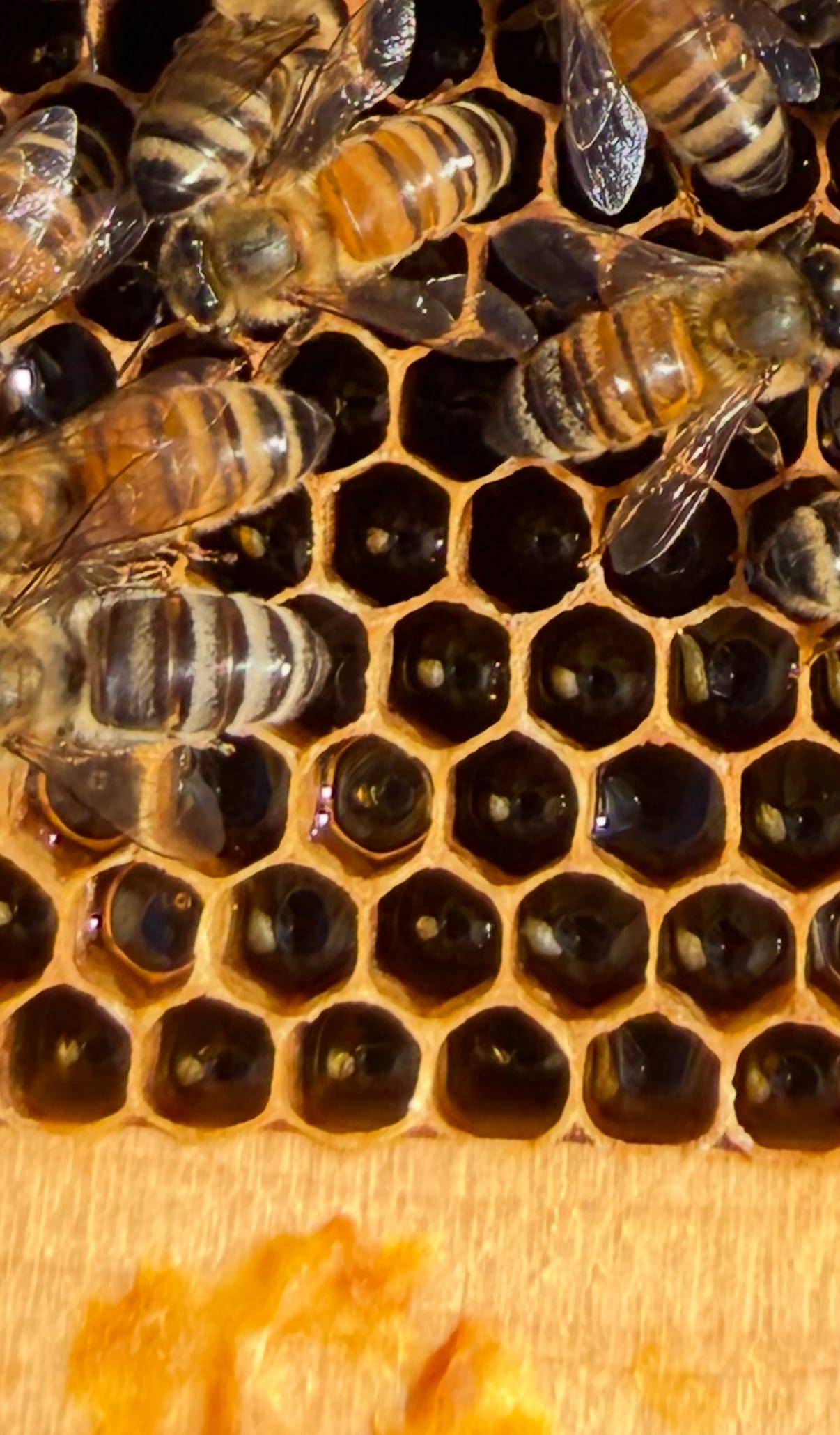
Some of the hives up at the club’s apiary had overwintered well and were therefore already bustling with activity. In a couple of hives, we actually saw up close and personal all the stages of bee life – contained on one frame! – from capped brood in the center (where we even witnessed a few new ‘adult’ bees breaking out of their capped cells), to larvae (which resemble milky white grubs) (and when the larvae get big enough, the nurse bees put a cap on each larva’s cell so it can complete its transformation), to cells with eggs in them. The eggs look like little grains of white rice suspended in liquid.
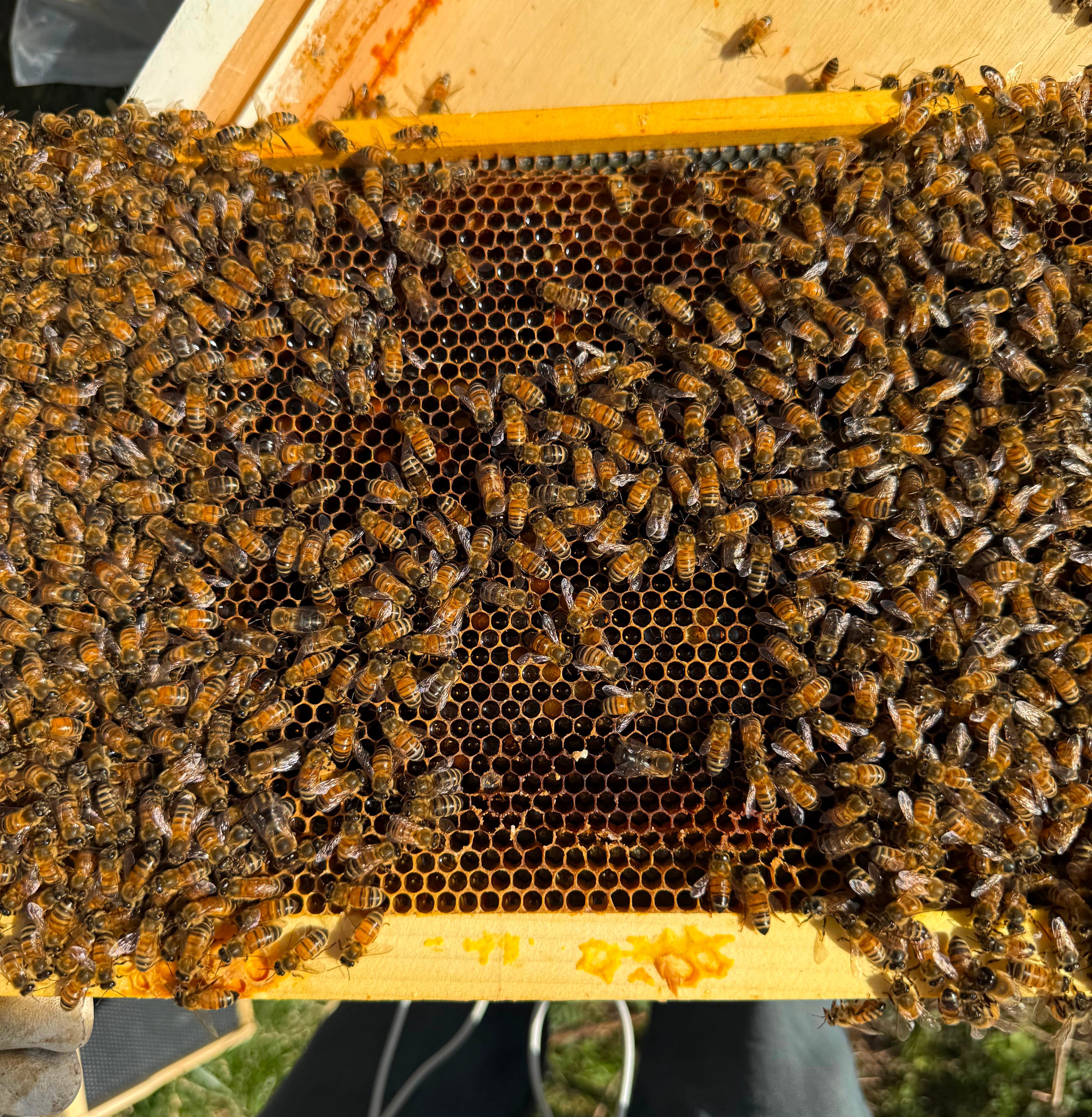
Ideally, the queen is laying her eggs in a definable pattern and it’s easy to see the progression of the life cycle in the successive, roughly concentric, circles of eggs – larvae – adults being ‘born.’
After attending the meeting at the apiary on Saturday, Karl and I were excited and inspired to get back to our hives and see how our bees compared to what we saw going on in the various hives up at 4C. We also wanted to make sure our queens had exited their cages and were starting to ‘do their thing.’
We especially noticed at this meeting how the beekeepers took their time examining the frames. I think last year I was way too intent on not ‘bugging’ the bees and barely gave myself a chance to even take in what I was looking at. I was (and continue to be) determined to take my time more this year. Yes, I want to have an intention of what I want to accomplish every time I open a hive. But I also want to give myself some grace and leeway to really do my best to take in what I am looking at.
That’s harder than you might think. It’s one thing to think, “I’m going to find that queen;” or “I’m going to find evidence of each stage of the life cycle.” And it’s quite another to pull a frame out of the hive and have 3,000 bees running around right in front of you on one frame, often piling on top of each other, making it difficult to see anything that might be going on within the comb itself.
I’m trying.
The most we could hope for in our first hive inspection of these two new colonies was (1) find and make sure the queens had escaped their queen cages; and (2) look for eggs.
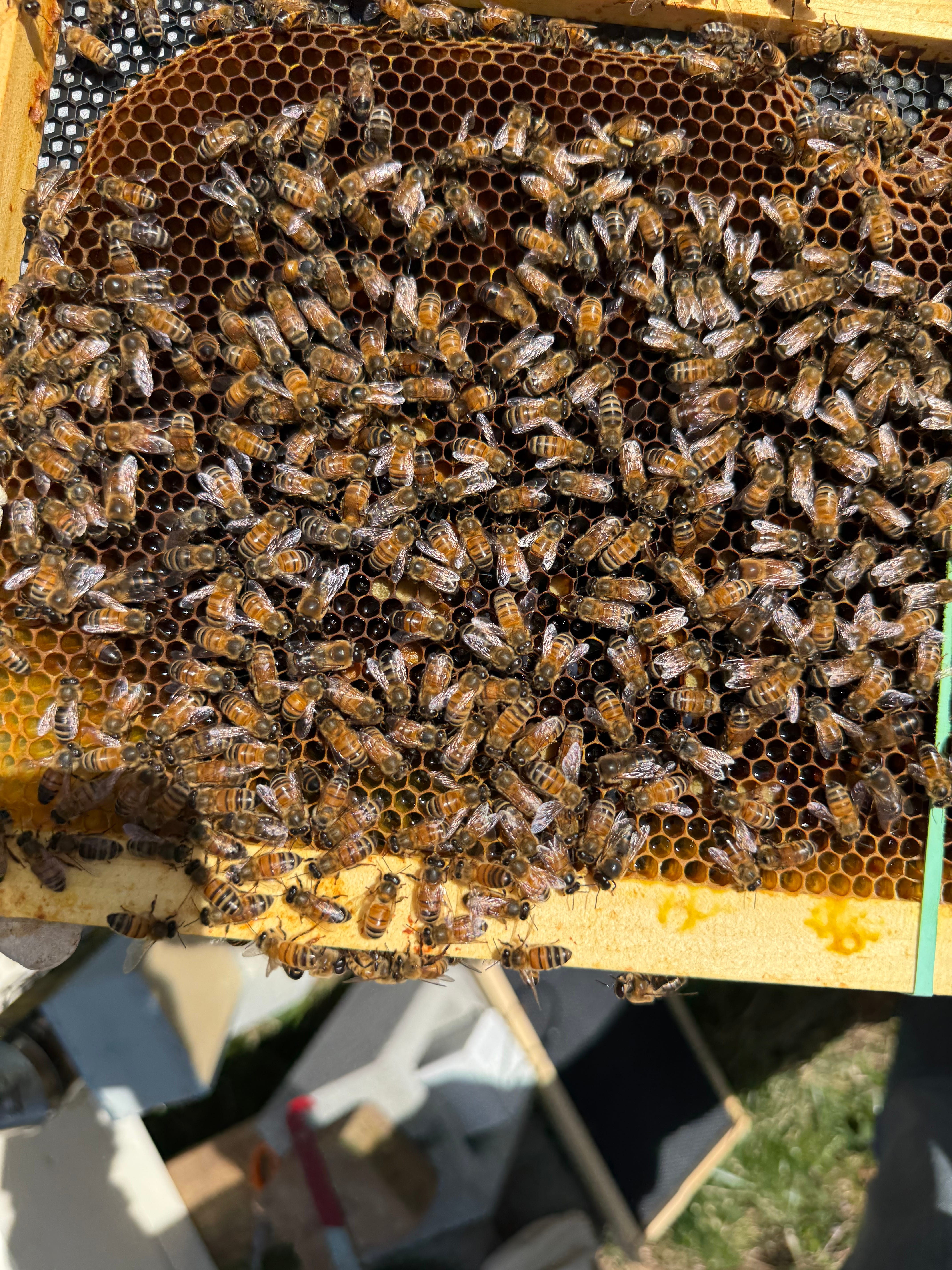
As of Sunday, 12 April 2026, we discovered (1) that both queens had tunneled out of their cages. But alas, we could not, in spite of our best efforts, (2) find the queen in either hive. Aaargh! And finally, (best of all?) we were able to take our time much more so this year and (3) could see – easily – lots and lots of eggs.
Huzzah!
Next hive inspection intention: find both larvae (the eggs we found the other day having matured into them) and more eggs. Of course, I’ll still look for the queens, but I’m not optimistic on that front.
I imagine the extraordinary warmth of this week will have a big impact on the bees’ productivity, especially since they already had comb to work with and didn’t have to start completely from scratch in either hive.